Praise Be To Foley, Vegas Golden Knights Hockey Website

Tag: Shea Theodore Page 2 of 24

Golden Knights Are Used To Change, Especially Behind The Bench

Ryan Craig working with the Golden Knights at 2017 Training Camp. (Photo Credit: SinBin.vegas Photographer Brandon Andreasen)

In nine seasons, the Golden Knights have been to the Stanley Cup Final three times, they’ve made the playoffs eight times, and they’ve hoisted the trophy more than five active NHL teams have in their history.

Through it all, one constant has been change.

We’ve been through a lot. I’ve been here for seven and a half years, the organization’s been around nine. There’s been a lot we’ve gone through. We’ve accomplished a lot. We’ve had our ups and our downs. -Mark Stone

Change is here for VGK once again. As they embark on season number 10 in the NHL, the Golden Knights named Ryan Craig as the team’s 5th head coach. Oddly enough, Craig is about as much of a longtime fixture in the Vegas organization as anyone, having served as an assistant under the first three coaches and the AHL head coach the last few seasons.

Yet, he’s now stepping into the main role, and his connection to the players may be the most important unknown for VGK heading into 2025-26.

You just kind of go to the next guy. I think over my time here, we’ve had a lot of really good coaches and sometimes that’s just part of the business. It’s going to be a different feeling having somebody in new, but I think that’ll be a kind of a fresh start and some bring some fresh juice to camp. -Shea Theodore

This organization has seen what it looks like when the coach and the players jive well, they’ve also seen how challenging it can be if they don’t.

I think we want to have a structured coach with good energy. I think that’s what Torts was so good at, the energy. He really brought belief into the locker room. The goal is to have the belief between the coaches, the management, and the players all pulling on the same rope. -Stone

Through all the change, the standard has remained the same. And as always, if that standard is not met, more change will be right around the corner.

Order Giordano's

Cassidy Frustrated With Veteran D-Core’s Struggles Against Heavy Forecheck

(Photo Credit: SinBin.vegas Photographer Brandon Andreasen)

The Golden Knights have spent a lot of time, money, and assets rebuilding their defense after a career-ending injury to Alex Pietrangelo.

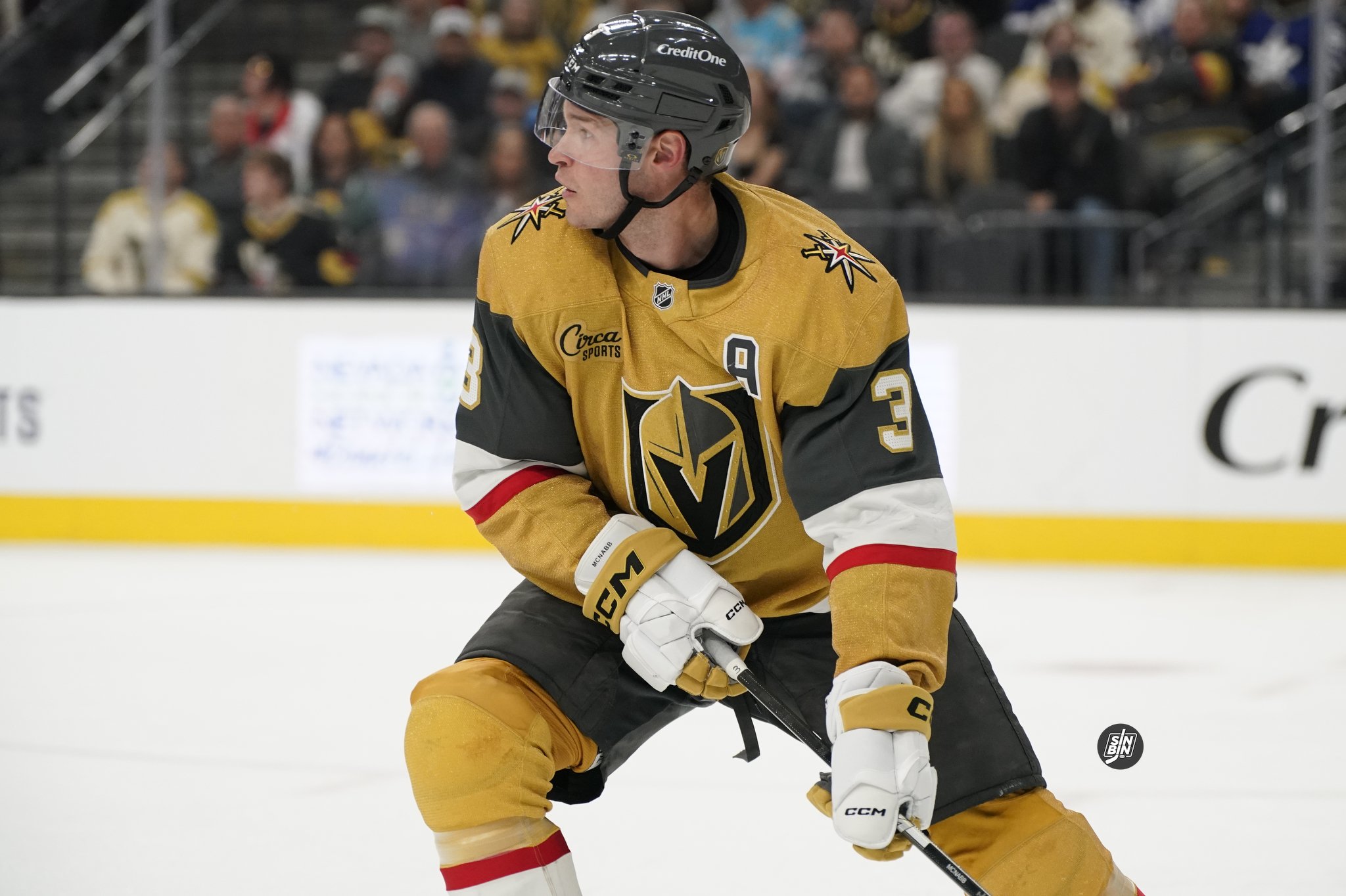
Shea Theodore and Brayden McNabb have been asked to step into the first pair role. VGK spent major assets to bring in Noah Hanifin and Rasmus Andersson. They swapped Nic Hague out for Jeremy Lauzon and have tasked Kaedan Korczak to fill Zach Whitecloud’s shoes.

It hasn’t gone as swimmingly as the Golden Knights would have hoped, but it certainly has not been bad. VGK currently rank 3rd in shots allowed per game, yet sit in 19th in goals against. Some of the blame, maybe most, lies at the feet of the goaltending, however, the new-look defense have had some issues themselves.

A specific issue they’ve struggled with recently cropped up once again last night against the Wild as they allowed three goals in a little more than three minutes.

The first one’s a tough one. There’s miscommunication, they get a breakaway, and they score. Not the end of the world, we’re playing fine. But the next two we had pucks below the goal line to break out. We didn’t execute. That was a big problem all night. Big problem. -Bruce Cassidy

How Were Each Of VGK’s Eight Olympians Used In The 2026 Games

(Photo Credit: @GoldenKnights on X/Twitter)

Sadly, the Olympics are over. Now that the United States has proven its supremacy over the rest of the world in the sport of hockey, it’s time to return to the task at hand here in Las Vegas, winning another Stanley Cup.

The Olympics offered Golden Knights fans somewhat of a new look at many of the best players on the roster. With different teammates, different coaches, and different roster sizes, many VGK standouts were placed in unfamiliar roles. The condensed tournament causes all sorts of sample size issues, but there’s always something to glean from hockey games of that magnitude.

Eight Golden Knights players participated in the tournament for five different nations. Their usage varied drastically.

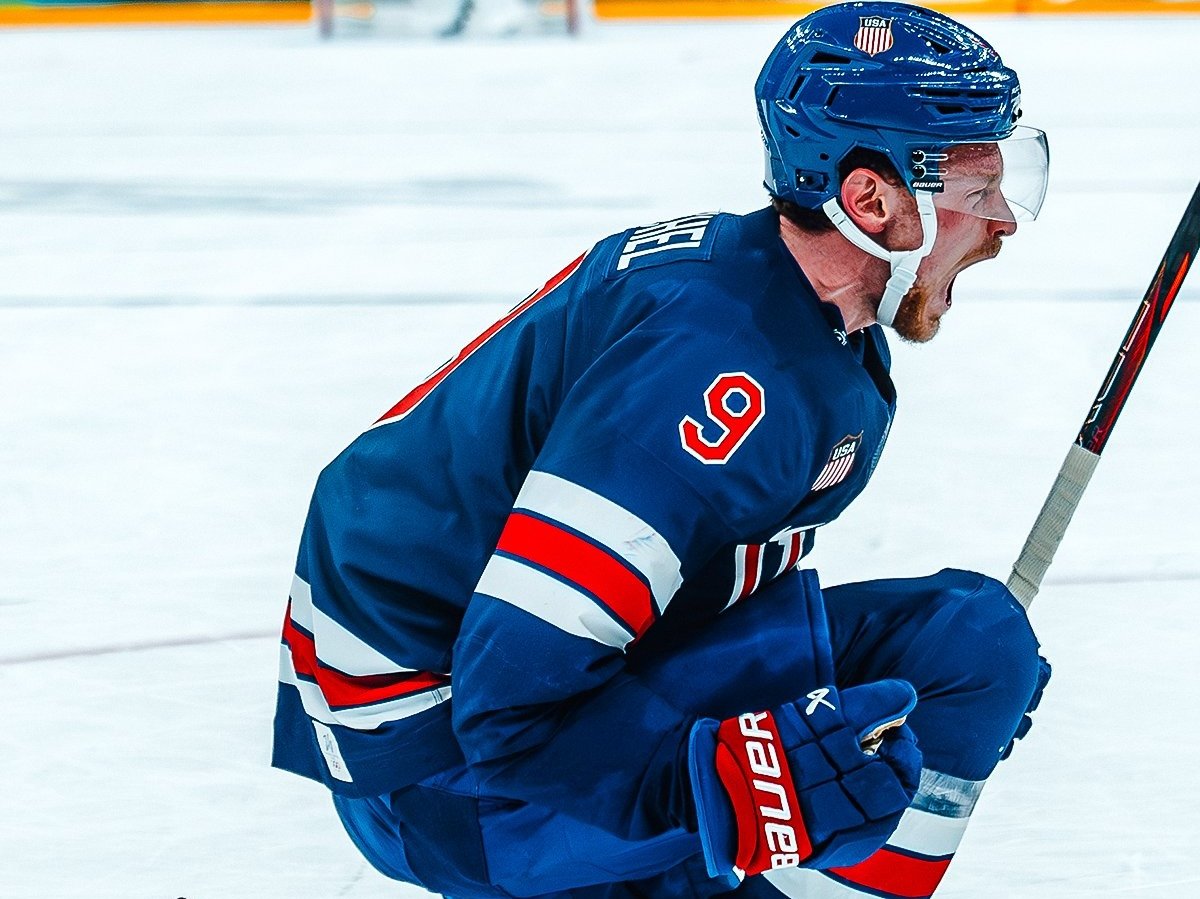
Jack Eichel
USA 🥇

As they do in Vegas, Team USA relied heavily on Eichel. He led all forwards in ice time by more than six minutes, and he finished with the 3rd most ice time on the entire team. For the whole tournament, Eichel centered a line between the Tkachuk brothers, and their impact was felt in all three zones. Early in the tournament, the line dominated on the forecheck and created havoc around the front of the goal. But as the Games progressed into the medal rounds, the Tkachuk/Eichel/Tkachuk line started to take on a bit more defensive responsibility. Eichel was also the fulcrum of the USA power play, in his usual spot on the half wall, and he was typically on USA’s second group of penalty killers after J.T. Miller and Vincent Trocheck.

Eichel finished the Olympics with two goals and six points while landing 25 shots. He was a +5 and played 109:39 over six games for an average of 18:16 per game. He led the team in slot shots, was second in inner slot shots, and was clearly one of, if not the most, impactful forwards on the roster.

Mark Stone
Canada 🥈

Vegas’ captain was placed on a line with Sidney Crosby and teammate Mitch Marner to open the Olympics. That line dominated pretty much every time over the boards, especially against the weaker competition in group play. Stone scored a tap-in goal on an unbelievable pass from Marner and ultimately scored two goals and four points in the tournament. He was used on the second power play unit in his usual spot near the goal line, and he was consistently used (often with Marner) as a penalty killer. Stone’s impact fell off a bit in the final two games after Crosby suffered an injury. In the gold medal match, Stone played just 14:53, landed just one shot on goal, and was the least noticeable of any of his games during the Olympics.

2026 Winter Olympic VGK Primer

(Photo Credit: @NHL on X/Twitter)

The 2026 Winter Olympics are here, and for the first time since the Golden Knights became a franchise, NHL players will participate for one of sports’ most coveted prizes. Here’s a little rundown of everything you need to know about the tournament and VGK’s participation.

Tournament Format

12 teams have been drawn into three groups of four.

Group A – Canada, Switzerland, Czechia, France
Group B – Finland, Sweden, Slovakia, Italy
Group C – USA, Germany, Latvia, Denmark

The winner of each group, along with the best 2nd place finisher, will automatically advance to the quarterfinals. The remaining eight teams will be ranked 5-12 based on position in the group, highest number of points, goal difference, number of goals scored, and 2020 IIHF ranking, in that order. These teams will play in the first round of the playoff with matchups of 5v12, 6v11, 7v10, and 8v9.

The four automatic qualifiers will be ranked 1-4 using the same criteria to determine who they will play in the quarterfinals. 1v8/9, 2v7/10, 3v6/11, 4v5/12.

In the semifinals, teams will be reseeded so that the highest remaining team plays the lowest and the middle two play each other.

The highest-seeded team is always designated as the home team.

The tournament uses a three-point system.
3 points = Regulation win
2 points = Overtime win
1 point = Overtime loss
0 points = Regulation loss

Group stage games that end tied will go to a 5-minute 3-on-3 followed by a shootout. Playoff games prior to the gold medal match, will go to a 10-minute 3-on-3 followed by a shootout. And the gold medal match is 3-on-3 until a goal is scored.

VGK’s Wounded Offense Needs Shot In The Arm For Two In Alberta

(Photo Credit: @NHL on X/Twitter)

This weekend, the Golden Knights will be without two of their top players in Alberta. Tonight, Vegas will face a Calgary team that’s 10 points back and is expected to miss the postseason for the fourth straight season. However, the Flames are holding their opponents under three goals per game this season. Like Vegas, Calgary is in the Top 12 for allowing the fewest number of goals per 60.

Since Thanksgiving, the Golden Knights have participated in nine games, and five have gone into an overtime period or a shootout. Without that extra hockey, Vegas is averaging 2.44 goals per game in regulation.

Both Calgary and Edmonton pose problems when the Golden Knights are struggling to score, as they did against the Devils on Wednesday.

VGK’s Scoring Rank Since Thanksgiving

  • 5-on-5 Goals: 14 (31st)
  • 4-on-4 Goals: 1 (12th)
  • 5-on-4 Goals: 6 (13th)
  • 3-on-3 Goals: 2 (3rd)

It’s been almost 10 games, and the Golden Knights are the NHL’s 3rd-worst club in even-strength goals during that stretch. Scary enough, if you subtract all goals scored on the PP or in OT, Vegas drops to second-to-last with only 14 5-on-5 goals. Gulp.

Without Eichel’s 1.32 points per game and Theodore’s 0.65 PPG, the Golden Knights will need others to compensate in Alberta. The Flames have been averaging over three goals per game since late November, and no surprise, the Oilers are leading the league with more four goals scored per game recently. They’ve also been holding opponents to 2.40 goals per 60. VGK’s woeful offensive production could be coming at the wrong time.

On the flip side, maybe the absences of two of Vegas’ top playmakers jumpstart other skilled members of the team. Much of the weight should fall on Tomas Hertl, Mitch Marner, and Mark Stone. However, all three are averaging far less than half a goal per game. While Marner is averaging a point per game, he’s still sitting on six goals for the season. VGK’s $96M free agent is on pace for 15 total goals in 2025-26. Rookie Braeden Bowman is projected for 20, and he didn’t enter the lineup until VGK’s 16th game.

Let’s hope this is the adversity Marner needed to establish himself as the major impact player the organization can rely on.

Order Giordano's

Golden Knights Underperforming In Blocked Shots This Season

(Photo Credit: SinBin.vegas Photographer Brandon Andreasen)

Yesterday in New Jersey, the Golden Knights blocked a total of 23 shots on goal. It was only the 7th time this season that Vegas got in the way of 20 or more shots in a game. Dating back to last season, the Golden Knights are well below coach Bruce Cassidy’s seasonal averages since his arrival in 2022-23.

VGK’s Blocked Shots Per Game Under Cassidy

• 2022-23: 17.94 (1st)
• 2023-24: 18.16 (3rd)
• 2024-25: 15.30 (15th)
• 2025-26 (27 Games): 15.05 (11th)

For some reason, the past two seasons, the Golden Knights have been underperforming in the shot block department. It’s probably not a philosophy change as Cassidy-led teams are usually among the league leaders in blocked shots. Since he became Vegas’ leader, his teams have blocked the 3rd most shots in the NHL, behind Philadelphia and Montreal. Vegas is just one of three Western Conference teams to be in the Top 10 since 2022-23.

To no surprise, Brayden McNabb nearly leads the league (20-game minimum) in blocked shots with 7.87 per 60. If there’s one player you can rely on to lay out in front of a puck, it’s the nine-year Vegas veteran. After McNabb, Keegan Kolesar is next on the Golden Knights with 5.87, then Shea Theodore at 3.92. However, several Golden Knights aren’t doing their part.

Why is Colton Sissons blocking under three shots per 60? Why do Ivan Barbashev and Tomas Hertl block fewer shots than Jack Eichel and Mitch Marner? If we’re stumped, you have to assume Cassidy is as well. The sad reality is, without McNabb, Vegas would be dead last in block shots. Not a position we would ever think the Golden Knights would be in.

(Credit: NHL.com)

Since their first-ever game in 2017 against the Dallas Stars, VGK is 3rd in blocked shots. If you subtract this season and the previous season, Vegas has the 2nd most blocked shots since 2017-18. This season, they’re on pace for 11th place in the league. Not good enough for a historically balanced lineup.

In their Cup run 2022-23 season, Vegas was first in total blocked shots. The second team with the most blocks were more than a full shot fewer per game. VGK blocked 1,494 shots; Philadelphia blocked 83 fewer shot attempts. That’s a wide margin between the top two clubs in that statistic.

(Credit: NHL.com *2017-2025)

Of course, the total amount of blocked shots has dipped since Alec Martinez left the club. However, most of the roster witnessed his courage and desire to block any incoming shot. Outside of McNabb, the rest of the lineup needs to spend more time watching Martinez highlights to get more motivated to sacrifice themselves on the ice when needed.

A final editorial, blocking shots is vital to winning a Stanley Cup. However, it’s dangerous and shouldn’t be a habit for every player in the regular season. In my opinion, Eichel and Marner should shy away from sacrificing their bodies during the regular season. But, once the playoffs arrive, they’d better block shots.

Order Giordano's

Second Power Play Unit Making Life Easier On Coaching Staff

(Photo Credit: @GoldenKnights on X/Twitter)

When the Golden Knights get a power play, everyone in the arena knows what’s coming. Jack Eichel, Mitch Marner, Tomas Hertl, Mark Stone when he’s available, and leading goal-scorer Pavel Dorofeyev. It’s a menacing unit that has spent the better part of the last two seasons scoring at an extraordinary pace.

Typically, that group, considered the first unit, has the chance to operate for a majority of the power play time available. To illustrate just how often they play, the Golden Knights have been on the power play for 95:47 this season. Marner has been on the ice for 81:27 and Eichel’s been out there for 79:58.

You want competition. I still believe that first unit is elite when they are healthy and going. It’s good for the second unit to feel part of it. They know the other unit is going if they feel fresh. -Bruce Cassidy

In each of the last two games, the second unit has used its time wisely. No one has been more effective in that regard than Colton Sissons. The 4th line center, most known for his faceoffs, was recently inserted onto the power play as a net front presence. He’s been on the ice for just 2:36 of power play time, and the Golden Knights have scored twice.

I’ve got to give Sissons credit. Both goals he’s been parked right on top of the goaltender, legally, taking his eyes away. -Cassidy

Look at his positioning on each goal.

Page 2 of 24

Powered by WordPress & Theme by Anders Norén